Premium Ultrasound Showdown: GE Logiq E10 vs. Philips EPIQ Elite vs. Mindray Resona

Choosing the Pinnacle of Ultrasound Technology
In the world of medical imaging, selecting a premium general imaging ultrasound system is a significant investment that impacts diagnostic confidence, workflow efficiency, and patient care for years to come. The top tier of the market is dominated by technological powerhouses, each offering a unique approach to acoustic science and clinical utility. This guide provides a professional comparison of three leading systems: the GE Logiq E10, the Philips EPIQ Elite, and the Mindray Resona series.
As specialists in high-performance medical equipment, we understand that the "best" system is not a one-size-fits-all answer. It depends entirely on your department's primary applications, patient demographics, and operational goals. Let's delve into the core philosophies and standout features of each platform to help you make an informed decision.
GE Logiq E10: The Power of cSound Architecture
The GE Logiq E10 is built upon a revolutionary platform known as the cSound™ Architecture. This is a fundamental shift from traditional hardware-based beamforming to a software-driven approach. Instead of processing data in small segments, cSound captures and reconstructs a massive amount of data, creating the image from a complete dataset.
Unprecedented Imaging Performance
The practical result of cSound is an image that boasts remarkable uniformity from the near field to the far field. This technology provides exceptional spatial and contrast resolution, even at significant depths. For clinicians, this means greater diagnostic confidence, particularly when scanning technically difficult patients where penetration is a challenge.
Key imaging advantages include:
- XDclear™ Probes: When paired with GE's advanced transducer technology, the Logiq E10 delivers superior bandwidth and acoustic efficiency, resulting in stunning clarity and sensitivity.
- B-Flow™ Imaging: A GE exclusive, B-Flow provides real-time visualization of vascular hemodynamics, presenting blood reflectors directly without the limitations of conventional Doppler. It is invaluable for assessing complex flow patterns in vessels, fistulas, and stents.
- 2D Shear Wave Elastography: The system offers quantitative tissue stiffness assessment with a large field of view, providing crucial data for the evaluation of liver, breast, and other superficial lesions.
AI-Powered Workflow and Ergonomics
GE has heavily integrated artificial intelligence to streamline examinations. Tools like Scan Assistant allow you to create and follow customized exam protocols, reducing keystrokes and improving consistency between sonographers. AI-based features also automate tedious tasks, such as Doppler measurements and image optimization, freeing up the operator to focus on the patient.
The console is designed for user comfort and efficiency, featuring a large, high-resolution OLED monitor, an intuitive touchscreen interface, and a highly mobile, lightweight frame that makes transport and bedside scanning easier.
Philips EPIQ Elite: Precision with nSIGHT and Anatomic Intelligence
The Philips EPIQ Elite represents the culmination of Philips' expertise in ultrasound, centered around its proprietary nSIGHT Imaging architecture. This technology creates images with exceptional resolution and uniformity by using a precision beamformer with massive parallel processing, touching every pixel in the image optimally.
Anatomic Intelligence Ultrasound (AIUS)
Where the EPIQ Elite truly distinguishes itself is with its suite of Anatomic Intelligence Ultrasound (AIUS) tools. This is more than simple automation; it's an adaptive technology designed to turn images into answers. AIUS combines 3D organ modeling with advanced quantification to deliver results that are both reproducible and clinically robust.
Notable AIUS features include:
- HeartModelA.I.: Automates the quantification of the left ventricle and atrium, providing key measurements in seconds.
- AutoSCAN: This AI-driven feature automatically optimizes image gain and TGC during live scanning, ensuring consistent image quality with minimal user interaction.
- SmartExam: Similar to GE's Scan Assistant, SmartExam provides guided protocols to ensure exam consistency and reduce overall exam time.
Exceptional Transducer Technology
Philips has long been a leader in transducer innovation. The EPIQ Elite leverages the powerful xMATRIX transducers, which contain thousands of micro-elements. A single xMATRIX probe can acquire 2D, 3D/4D, Live xPlane, and MPR views without the need to switch transducers. This is a game-changer for efficiency in complex cardiac, vascular, and OB/GYN exams.
The platform excels in challenging applications like contrast-enhanced ultrasound (CEUS) and offers advanced solutions for fusion imaging, seamlessly overlaying live ultrasound with previously acquired CT, MR, or PET scans.
Mindray Resona Series: The ZST+ Platform Advantage
The Mindray Resona series, particularly the Resona 7 and Resona 9, has emerged as a formidable competitor in the premium space, largely due to its unique ZONE Sonography® Technology Plus (ZST+) platform. Unlike conventional line-by-line beamforming, ZST+ acquires and processes extremely large zones of acoustic data—up to 10 times larger than conventional systems.
Advanced Processing for Superior Clarity
This channel-data-based method allows for several unique processing techniques. Advanced Acoustic Acquisition retains more acoustic information for processing, while Dynamic Pixel Focusing achieves optimal pixel-level focus throughout the entire field of view. The result is an image with extraordinary temporal resolution and stunning clarity, particularly for moving structures.
The Resona platform is celebrated for:
- V Flow: A groundbreaking vector flow visualization tool that goes beyond the color and velocity information of traditional Doppler. V Flow displays the velocity magnitude and direction of blood cells, offering intuitive and accurate hemodynamic analysis.
- Sound Touch Elastography (STE): Provides quantitative shear wave elastography with high reliability and reproducibility metrics, making it a trusted tool for liver fibrosis staging.
- Smart Planes CNS: An intelligent tool for fetal neurosonography that automatically detects and measures key planes and parameters of the central nervous system, drastically simplifying a complex and operator-dependent exam.
A Compelling Value Proposition
Mindray has successfully packaged these high-end technologies into a system that often presents a more competitive price point than its established rivals. For institutions looking to acquire premium-level performance without the absolute highest capital expenditure, the Resona series offers a compelling and powerful alternative that does not compromise on advanced features or image quality.
Head-to-Head Comparison: Key Differentiators
When placing these systems side-by-side, the choice often comes down to which technological philosophy best aligns with your clinical priorities.
Image Quality & Core Architecture
All three systems produce spectacular images. GE's cSound is a powerhouse for penetration and uniformity, making it a top choice for general imaging in diverse patient populations. Philips' nSIGHT excels at delivering exquisite detail and resolution, often favored in specialized fields like cardiology and vascular. Mindray's ZST+ offers exceptional temporal resolution and novel processing, making it a strong contender in any application where motion and flow are critical.
Workflow & AI Integration
Each platform leverages AI to reduce exam times and improve reproducibility. Philips' AIUS is arguably the most mature in terms of anatomical modeling and automated quantification. GE's AI-based tools are robust and seamlessly integrated to assist the operator at every step. Mindray's Smart Planes and other intelligent features provide targeted, powerful solutions for specific, complex examinations.
Advanced Applications
Your choice may be dictated by a specific clinical need. For advanced vascular hemodynamics, GE's B-Flow and Mindray's V Flow offer unique, non-Doppler-based insights. For single-probe versatility in complex 3D/4D studies, Philips' xMATRIX technology is unparalleled. All three offer excellent elastography, fusion, and contrast capabilities, but with subtle differences in implementation and workflow that may favor one over the others for your specific protocols.
Conclusion: The Right Investment for Your Practice
Ultimately, the GE Logiq E10, Philips EPIQ Elite, and Mindray Resona are all exceptional examples of modern ultrasound engineering. There is no single "winner," only the right tool for the job.
The GE Logiq E10 is an all-around workhorse, ideal for departments needing confident diagnoses across a wide range of patient types, especially challenging ones. The Philips EPIQ Elite is a precision instrument, perfect for specialized centers that rely on advanced quantification and cutting-edge transducer technology. The Mindray Resona series is a technology-forward platform that delivers premium performance and innovative tools with an attractive value proposition, making it a serious contender for any institution.
The best way to determine the ideal fit for your facility is through a hands-on demonstration. We encourage you to contact us to schedule a personalized evaluation where we can explore how these technologies can address your specific clinical challenges and enhance your diagnostic capabilities.
Related Articles
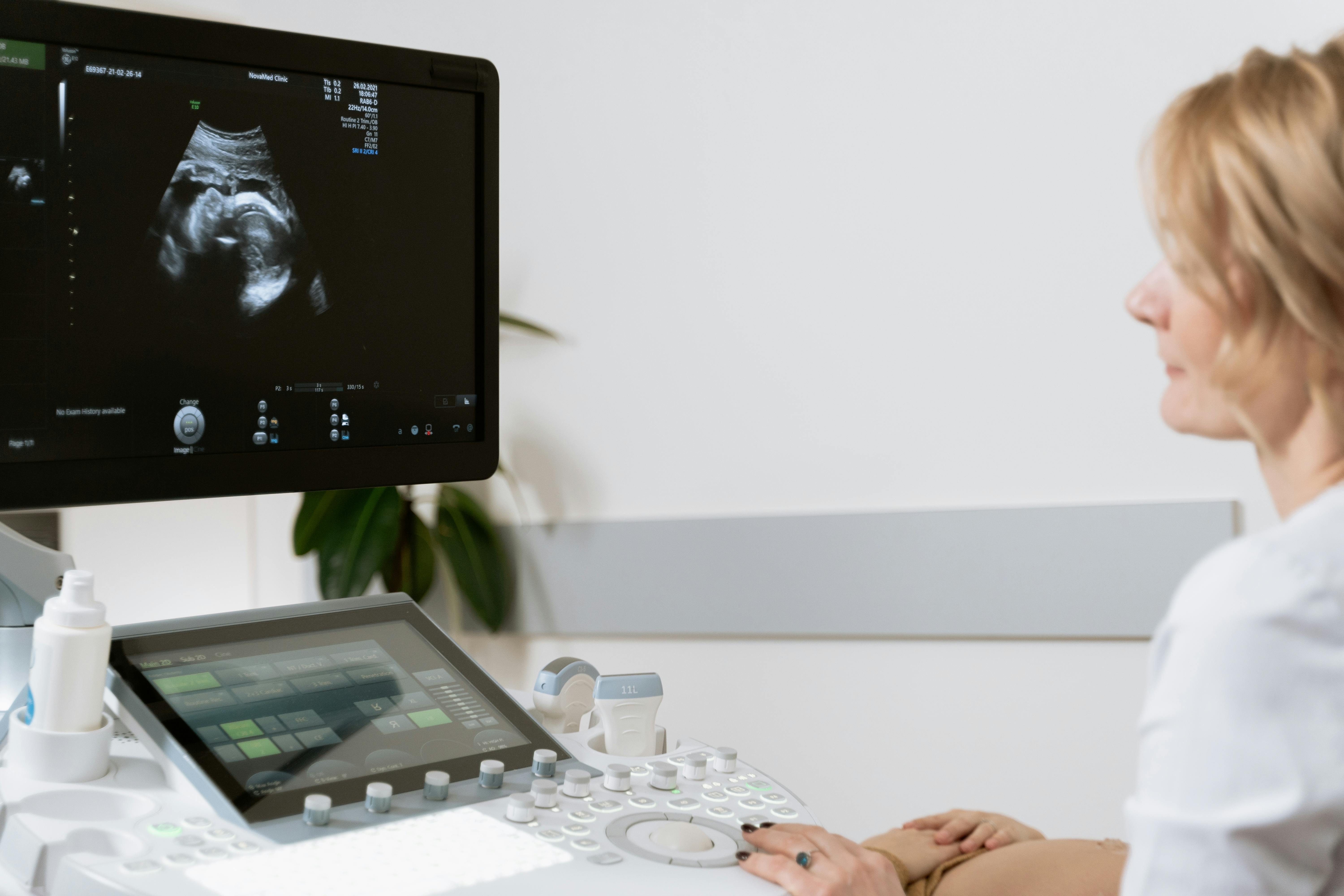
GE HealthCare Ultrasound Comparison: Voluson vs. Logiq Series
A comprehensive analysis for medical professionals comparing GE's premier ultrasound lines: the OB/GYN-focused Voluson and the general imaging powerhouse Logiq.
الغوص العميق للمتخصصين: مقارنة أنظمة الموجات فوق الصوتية المحمولة الملوّنة بعد عام 2020
مقارنة تقنية معمّقة لأحدث أنظمة الموجات فوق الصوتية المحمولة من GE وPhilips وSiemens وSamsung وCanon وMindray، مع توصيات عملية قائمة على السيناريوهات لمساعدة الأطباء في التنقل داخل عالم POCUS الحديث.